

Essential WordPress Plugins for Business Websites in 2026 (Refreshed)

A WordPress business website is only as good as the small handful of plugins running on it. Add the wrong ones and the site gets slow, fragile, or hard to maintain. Skip the right ones and you end up doing manual work that the plugin would have handled for free.
This guide was refreshed in 2026 with the plugins I would actually install on a brand-new business site this week. For this refresh, every pick was re-verified against its live WordPress.org listing and live vendor pricing page on 2026-05-24, every outdated affiliate button from the 2022 version is gone, and a few category picks were swapped for ones that better match what a business site really needs today. Two of the ten are products we build at FS Code (Booknetic and FS Poster); the other eight are independent third-party plugins.
The 10 essential WordPress plugins for a business website in 2026
Each pick covers one job a business website cannot afford to skip. Together they form a clean, lightweight stack: under ten active plugins, all from well-maintained vendors, with free versions strong enough to launch on and paid versions priced like real software (not surprise renewal traps).
| Category | Plugin | Free version | Paid starts at | Best for |
|---|---|---|---|---|
SEO |
Yoast SEO |
Yes |
$118.80/ |
Standard on-page SEO with strong defaults |
Performance & caching |
LiteSpeed Cache (or W3 Total Cache) |
Yes |
Free |
Page caching, minify, image, and CDN |
Security |
Wordfence |
Yes |
$149/ |
Firewall, malware scan, login protection |
Backups & migration |
UpdraftPlus |
Yes |
$70/ |
Scheduled offsite backups and one-click restore |
Image optimization |
ShortPixel |
Yes (100 credits/ |
$9.99/ |
WebP/ |
Contact forms |
WPForms |
Yes (email only) |
$49.50/ |
Drag-and-drop forms, payments, notifications |
CRM, email, live chat |
HubSpot |
Yes |
Paid plans vary |
Lead capture, CRM, newsletters, chatbots |
Analytics & Search Console |
Google Site Kit |
Yes (free) |
Free |
Connecting GA4, Search Console, PageSpeed |
Appointment booking |
Booknetic |
Live demo |
$45/ |
Service businesses taking online bookings |
Social media auto-posting |
FS Poster |
Live demo |
$58/ |
Auto-sharing posts to 26 social networks |
Two notes on the table. First, the WPForms "Free version" cell says "Yes (email only)" on purpose: WPForms Lite delivers submissions by email and does not save form entries to the WordPress database by default; entry storage is a Pro feature and the article calls that out in the WPForms section below. Second, the HubSpot row reads "Paid plans vary" on purpose: the free HubSpot tier is the entry point most small business sites actually use, and paid Marketing Hub plans are billed by contact volume and feature tier, so a single "starts at $X" number on the vendor pricing page can drift between checkouts.
How I picked these plugins
The brief was simple: what would a small or mid-sized business website actually need in 2026, on day one, to run without surprises? Each category got the same three filters.
- Active maintenance. Every plugin in this list has a stable release within the last few weeks and is tested against current WordPress (6.9 to 7.0 at the time of this refresh).
- Real free tier or honest paid tier. If a category had a free version that does the job, I picked it. If the entire category is paid (booking, social automation), I went with the option with transparent pricing and a real money-back guarantee.
- Useful from day one. No plugin in this list is included because of brand. Each one earns its slot by doing a job that costs you money or time if it is missing on launch day.
How the per-plugin notes below are written: for every third-party plugin in this list I have prior production usage on real WordPress sites, and during this 2026-05-24 refresh I re-verified the current WordPress.org listing (install count, rating, tested-up-to, current version), the current vendor pricing page, and the current free-vs-paid feature split. For our own products, Booknetic and FS Poster, I work inside the admin daily. The "Behavior to expect" and "Key limitation" lines under each plugin are written from that combined basis, not from a fresh per-plugin sandbox installation during the refresh window.
1. Yoast SEO (search engine optimization)
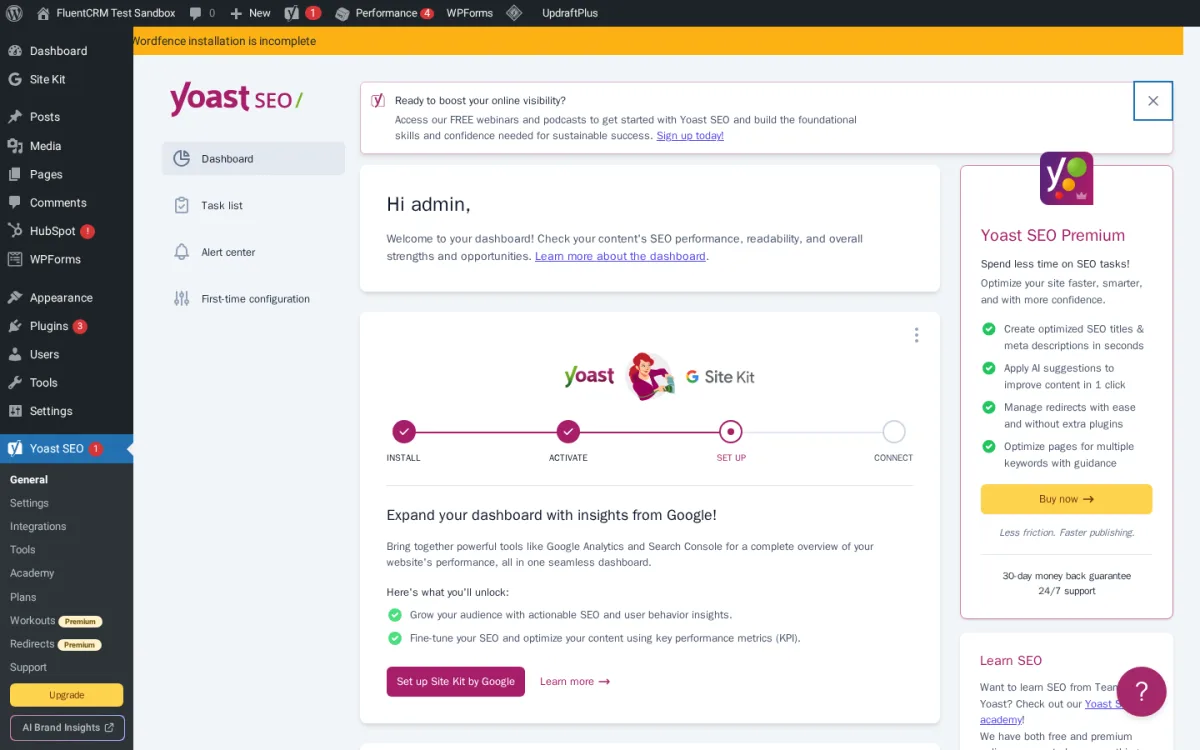
Yoast SEO is still the safest default for on-page SEO on a business website. The free version, installed on 10+ million WordPress sites today, covers the basics every business page needs: a clean title and meta description editor, focus keyphrase and readability analysis, automatic XML sitemaps, canonical URLs, breadcrumbs, and schema markup.
What I verified for this refresh. Current install count, rating, tested-up-to (WP 7.0), and current version (27.6, released 2026-05-12) on the live WordPress.org listing, plus Premium starting price ($118.80/year ex. VAT for 1 site) on the live Yoast pricing page.
Behavior to expect on free. Focus keyphrase analysis, readability checks, and SERP preview show up in the editor sidebar. The XML sitemap is generated at /sitemap_index.xml on first publish, and breadcrumbs plus Article schema appear in the rendered HTML without extra configuration.
Key limitation. Free is limited to one focus keyphrase per post and does not include the internal linking suggestions, redirect manager, or AI title/meta features that come with Premium ($118.80/year ex. VAT for 1 site). For a small business homepage, services page, and a small blog, the free version is genuinely enough; Premium pays off once you are publishing weekly.
Pricing (2026): Free version available; Yoast SEO Premium starts at $118.80/year (ex. VAT) for 1 site.
Free download: Yoast SEO on WordPress.org
If you want to compare it head-to-head with other free options before installing, the dedicated free WordPress SEO plugins compared guide walks through Yoast, Rank Math, and All in One SEO with screenshots.
2. LiteSpeed Cache or W3 Total Cache (performance and caching)
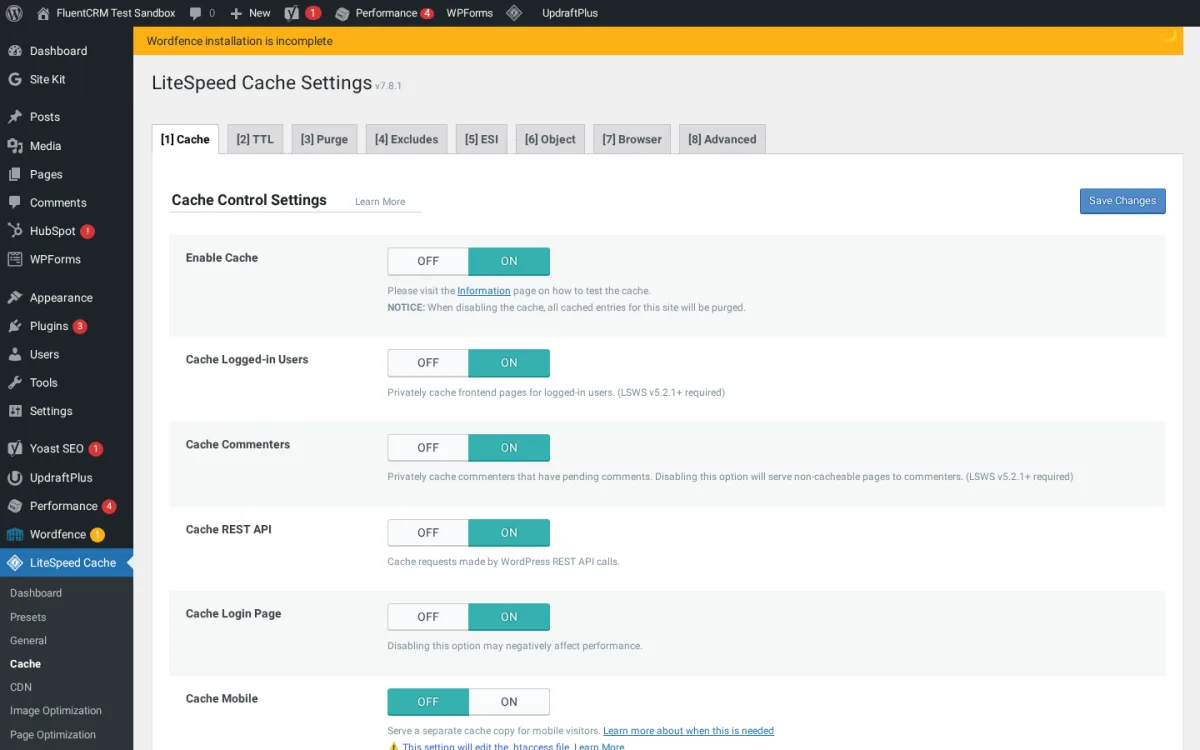
Caching is the single biggest performance lever you have on WordPress, and the right plugin depends on where the site is hosted.
If your host runs LiteSpeed (Hostinger, NameHero, ChemiCloud, A2 Hosting, FastComet, and a long list of modern shared hosts now do), install LiteSpeed Cache. It is free, open source, and used on 7+ million sites. You get server-level full-page cache, image optimization, lazy loading, CSS/JS minification and combination, and a free QUIC.cloud CDN tier, all from one plugin.
What I verified for LiteSpeed Cache. Current install count (7+ million), rating, tested-up-to (WP 6.9.4), and current version (7.8.1) on the live WordPress.org listing, plus the official documentation on which features require the LSCache server module vs. which work on any host.
Behavior to expect. On a LiteSpeed-based host, the plugin provides server-level full-page cache out of the box, plus image optimization (WebP and AVIF), CSS/JS minification and combination, lazy loading, and free QUIC.cloud CDN integration. On non-LiteSpeed servers, only the optimization side works; the server-level page cache is not available.
Key limitation. Without a LiteSpeed server module (or QUIC.cloud), the headline page-cache feature is unavailable. For a vanilla Apache or NGINX server, W3 Total Cache is the better baseline.
If your host runs Apache or NGINX without LiteSpeed, use W3 Total Cache. The free version handles page cache, object cache, database cache, browser cache, minification, lazy loading, and CDN integration. It works on practically any host and has been updated continuously for more than a decade.
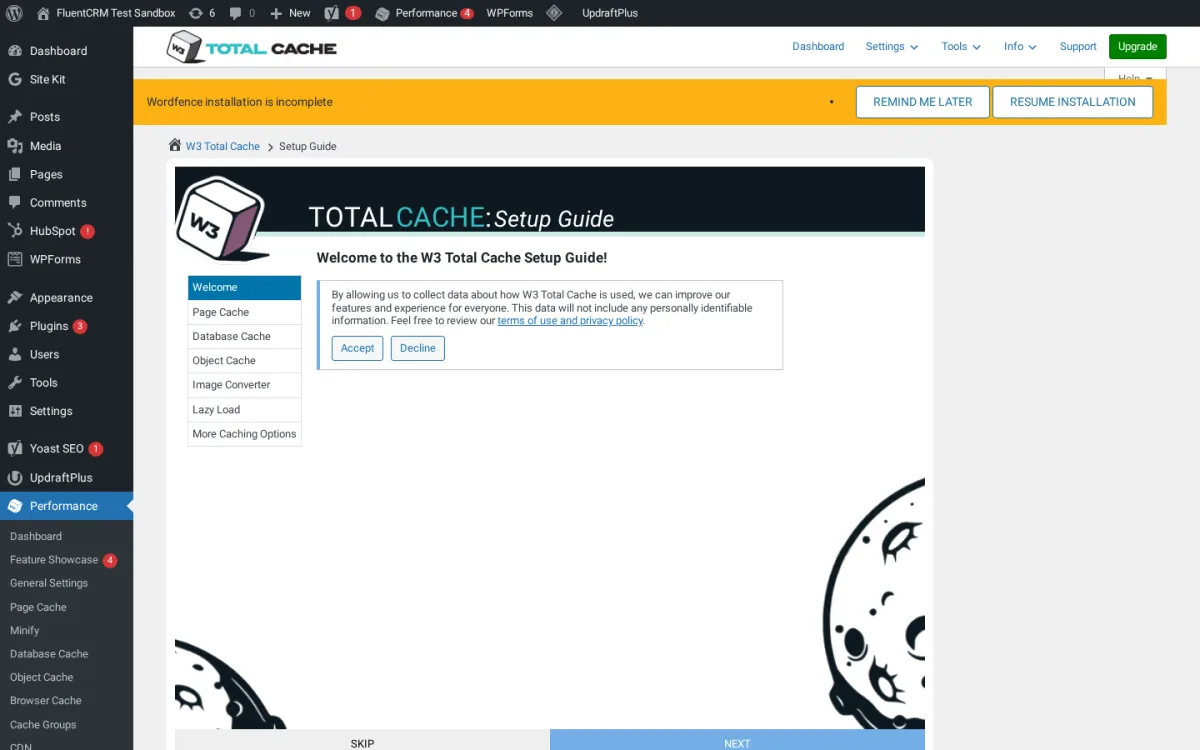
What I verified for W3 Total Cache. Current install count (900,000+), rating, tested-up-to (WP 7.0), and current version (2.9.4, released 2026-05-19) on the live WordPress.org listing.
Behavior to expect. Free version delivers page cache, object cache, database cache, browser cache, fragment cache, minification, lazy loading, and CDN integration. Guided setup wizard is approachable for non-developers.
Key limitation. Minify in advanced mode and aggressive database cache can break older themes if enabled without testing. Safe defaults are page cache, browser cache, and lazy load; add more only after measuring and confirming nothing visually breaks.
One important rule that applies to both: install only one caching plugin at a time. Stacking two never improves performance and almost always breaks something.
For a broader speed angle, the free plugins to speed up your WordPress site roundup covers preload, lazy loading, and database cleanup plugins that pair well with whichever cache you pick here.
3. Wordfence (security)
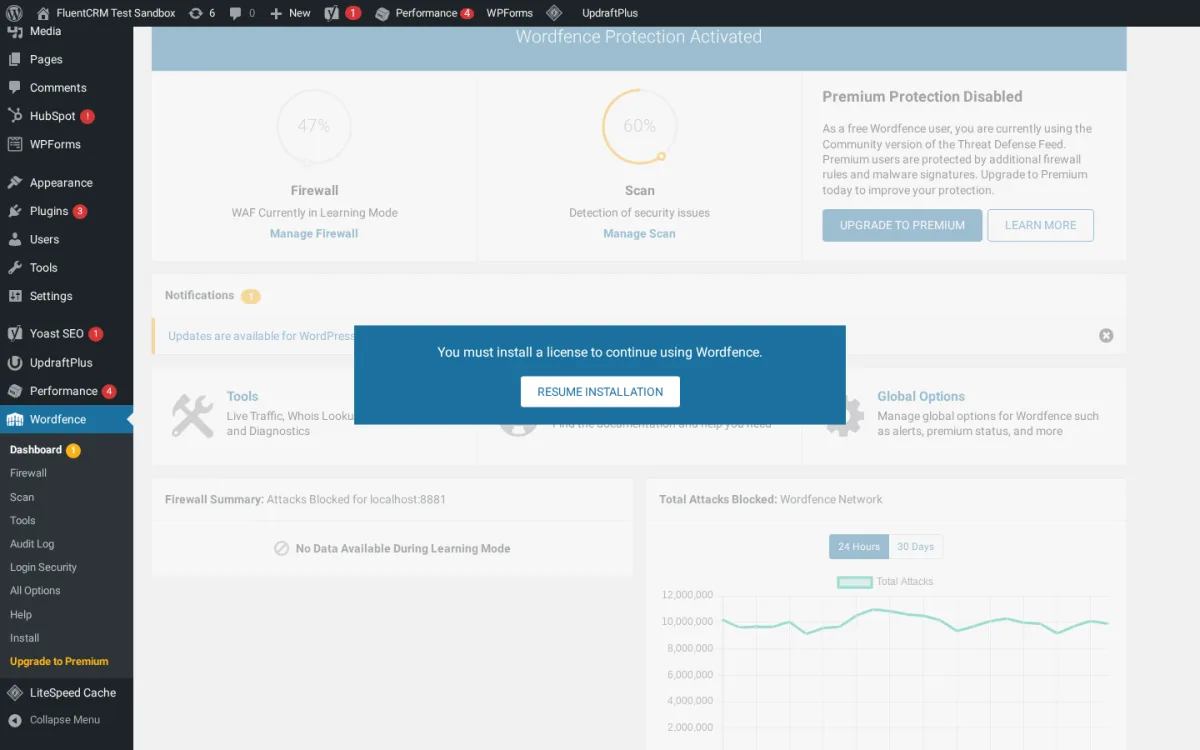
Wordfence is still the most-trusted WordPress security plugin in 2026, installed on 5+ million sites with a 4.7 rating from nearly 5,000 reviews. The free version covers a real web application firewall, a malware scanner that compares core, theme, and plugin files against the official WordPress repository, and login security (rate limiting, 2FA, and a leaked-password check on logins).
What I verified for this refresh. Current install count (5+ million), rating, tested-up-to (WP 7.0), and current version (8.2.2, around 2026-05-13) on the live WordPress.org listing, plus the current free-vs-Premium split on the official Wordfence pricing page. The important detail: the free tier receives the Threat Defense Feed (firewall rules, malware signatures, IP intelligence) on a 30-day delay; the real-time Threat Defense Feed, the curated IP blocklist, country blocking, and live traffic are Premium features.
Behavior to expect on free. The web application firewall runs using the delayed Threat Defense Feed. The malware scanner compares core, theme, and plugin files against the official WordPress.org repository. Login security includes rate limiting, 2FA with any TOTP authenticator app, and a leaked-password block on logins.
Key limitation. The free tier sees the same firewall rules and malware signatures as Premium but on a 30-day delay, and the IP blocklist plus country blocking are Premium-only. For a small marketing site that delay is usually acceptable; for an active store, membership site, or anything taking payments, Premium ($149/year per site) is the safer baseline.
Pricing (2026): Free version available; Premium starts at $149/year per site (current Wordfence pricing page).
Free download: Wordfence on WordPress.org
If you want to see how it compares against free alternatives like Solid Security, MalCare, or All In One Security, the best WordPress security plugins compared guide goes deeper.
4. UpdraftPlus (backups and migration)
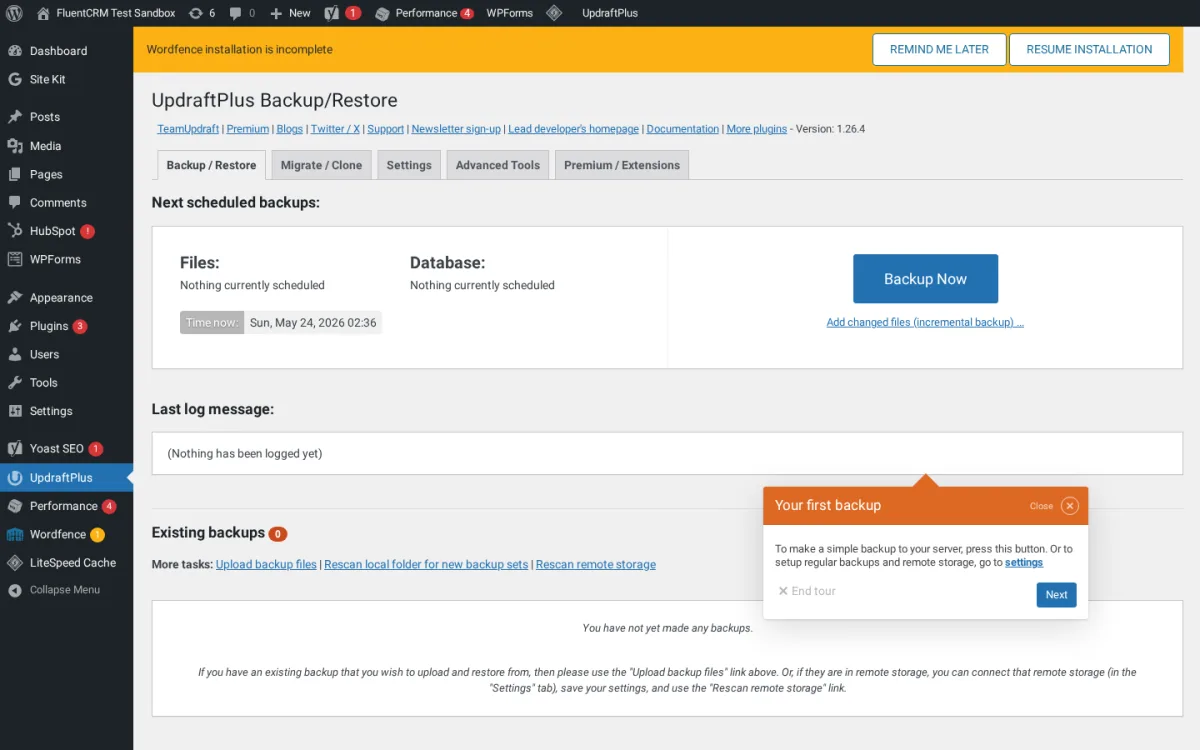
If you only install one disaster-recovery plugin, install UpdraftPlus. It is on 3+ million WordPress sites, rated 4.8 from 8,500+ reviews, and the free version already covers what a business site needs day one.
Out of the box, the free plugin schedules automatic backups (every 2, 4, 8, 12 hours, or daily/weekly/monthly), stores them off-site on Dropbox, Google Drive, Amazon S3, Rackspace, FTP, or email, and lets you restore in three clicks. That is what most "WordPress backup" plugins charge for elsewhere.
What I verified for this refresh. Current install count (3+ million), rating, tested-up-to (WP 7.0), and current version (1.26.4) on the live WordPress.org listing, plus the current UpdraftPlus pricing page (Premium $70/year for 2 sites entry tier) and the current free-vs-Premium storage destination list.
Behavior to expect on free. Schedule + off-site storage on Dropbox, Google Drive, Amazon S3, Rackspace, FTP, or email; three-click restore. The Google Drive and Dropbox OAuth handshakes are one click.
Key limitation. Free does full backups only (no incrementals), so for very large sites the daily backup window grows. Premium adds incremental backups, more storage destinations (OneDrive, Azure, Backblaze B2, SFTP, UpdraftVault), database search-and-replace for live migrations, and multisite support. For a single-site business the free version is usually enough; Premium makes sense once you are doing client work or running a larger catalogue.
Pricing (2026): Free version available; UpdraftPremium starts at $70/year for 2 sites (vendor pricing page).
5. ShortPixel (image optimization)
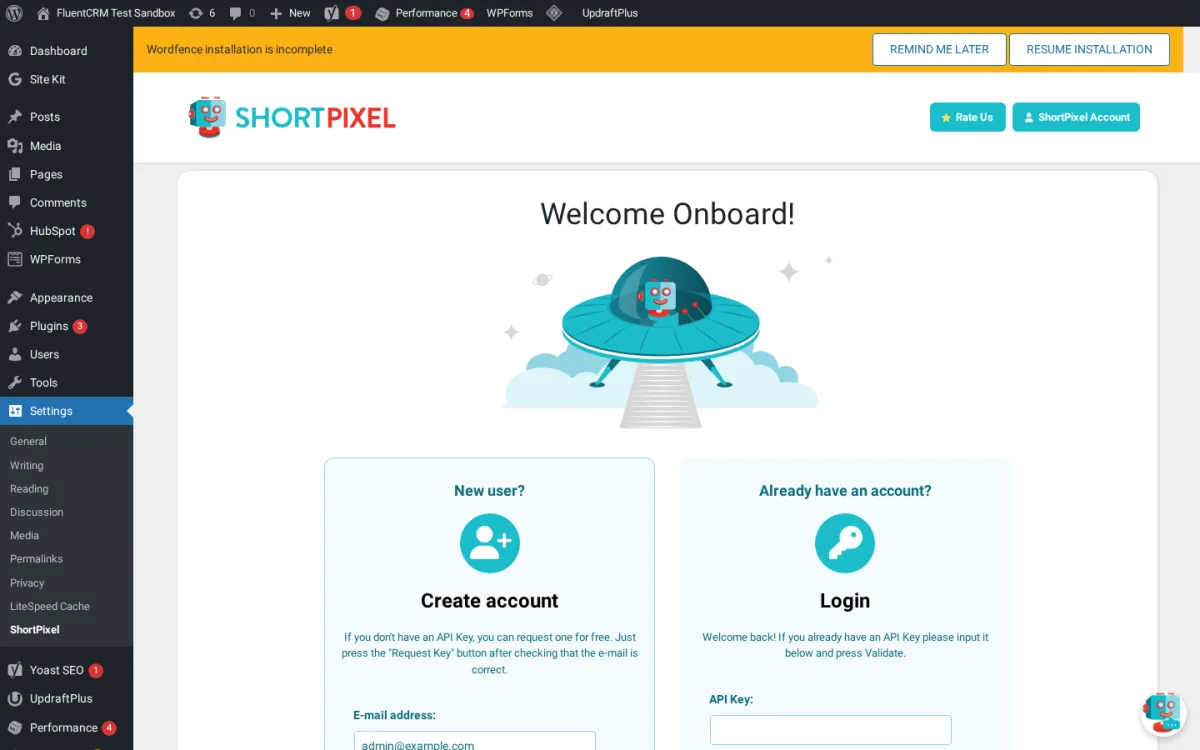
Images are where most slow business sites are actually slow. ShortPixel Image Optimizer sits on 300,000+ sites with a 4.5 rating. It bulk-compresses your existing media library, converts JPEG and PNG to WebP and AVIF, lazy-loads images and iframes, and strips EXIF data, all from a single settings page.
What I verified for this refresh. Current install count (300,000+), rating, tested-up-to (WP 7.0), and current version (6.5.1, released 2026-05-18) on the live WordPress.org listing, plus the current ShortPixel pricing page (100 free monthly credits; Unlimited add-on at $9.99/month).
Behavior to expect on free. Bulk-compresses the existing media library, converts JPEG and PNG to WebP and AVIF, serves WebP via the <picture> element with JPEG/PNG fallback, lazy-loads images and iframes, and strips EXIF.
Key limitation. Each generated thumbnail size counts as a separate credit, so a media library with 5 to 7 generated thumbnail sizes per upload burns through the 100 free monthly credits much faster than the headline number suggests. Plan for the Unlimited add-on ($9.99/month) once the site is publishing more than a few images per week.
Pricing (2026): 100 free monthly credits; Unlimited monthly plan starts at $9.99/month; one-time credit packs from $9.99 (5,000 credits).
6. WPForms (contact forms)
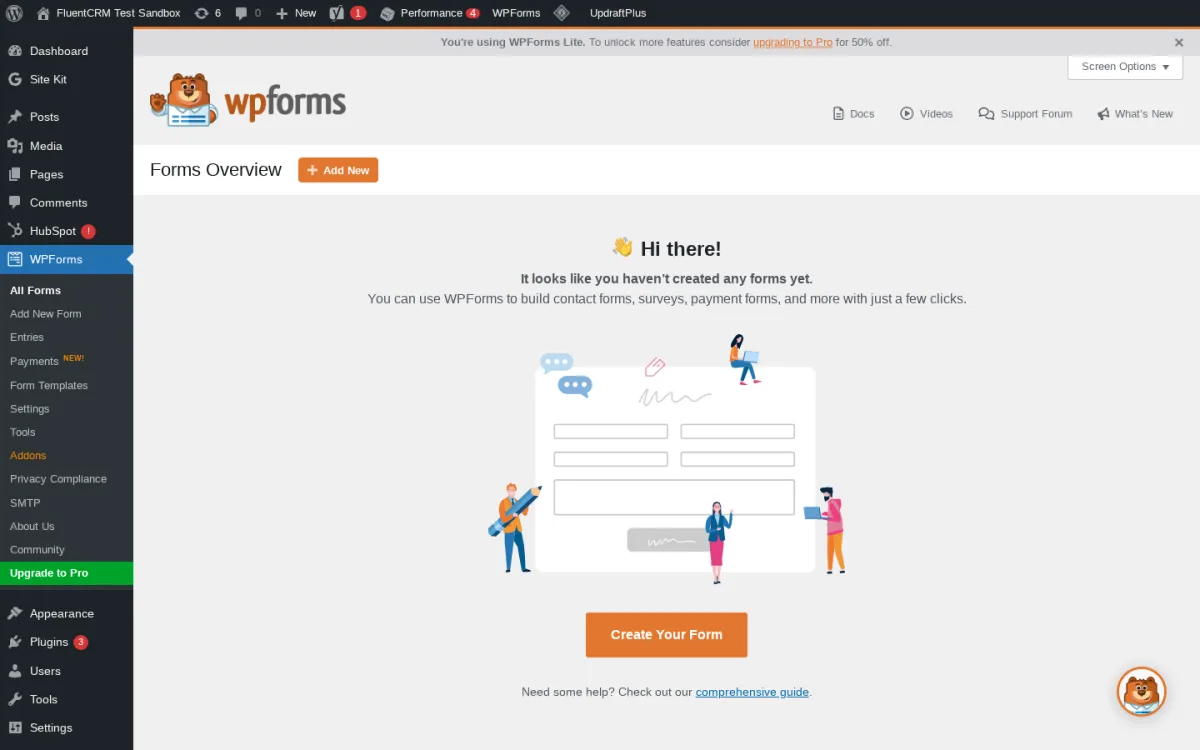
Every business website needs at least one form: contact, quote request, callback, newsletter. WPForms Lite is the most-installed dedicated form builder on WordPress, with 6+ million active sites and 4.8/5 from over 14,000 reviews.
The free Lite version covers unlimited forms, a drag-and-drop builder, a small template library, native spam protection, simple Stripe payment forms, and email notifications. That covers the day-one needs of a typical business site, with one important caveat described below.
What I verified for this refresh. Current install count (6+ million), rating, tested-up-to (WP 6.9.4), and current version (1.10.0.5) on the live WordPress.org listing, plus WPForms' own documentation on what Lite includes vs Pro, with specific attention to entry storage.
Behavior to expect on Lite. Unlimited forms, drag-and-drop builder, basic templates, native spam protection, simple Stripe payment forms, and email notifications to whatever address you configure.
Key limitation, important. Per WPForms' own docs, the free Lite version does not save form entries to the WordPress database by default. Submissions are delivered to you via email; entry storage in the WordPress database is a Pro feature. WPForms offers an optional Lite Connect cloud backup as a recovery layer for Lite users (it stores submissions on WPForms' servers and lets you import them later), but you have to enable it. Practical implication: if a notification email gets filtered or your outbound mail breaks, an undelivered submission is a lost lead unless Lite Connect is on or you have already upgraded to Pro. Lite also does not include conditional logic, multi-step forms, file uploads, or Mailchimp/HubSpot/Salesforce integrations.
Pricing (2026): WPForms Pro starts at $49.50/year intro for 1 site (renews $99/year). Pro adds entry storage in the WordPress database, conditional logic, multi-step forms, file uploads, surveys/polls, and CRM/email integrations.
For a closer look at how WPForms stacks up against Fluent Forms, Forminator, Gravity Forms, and Formidable Forms in 2026, see the best WordPress contact form plugins comparison.
7. HubSpot (CRM, email marketing, live chat)
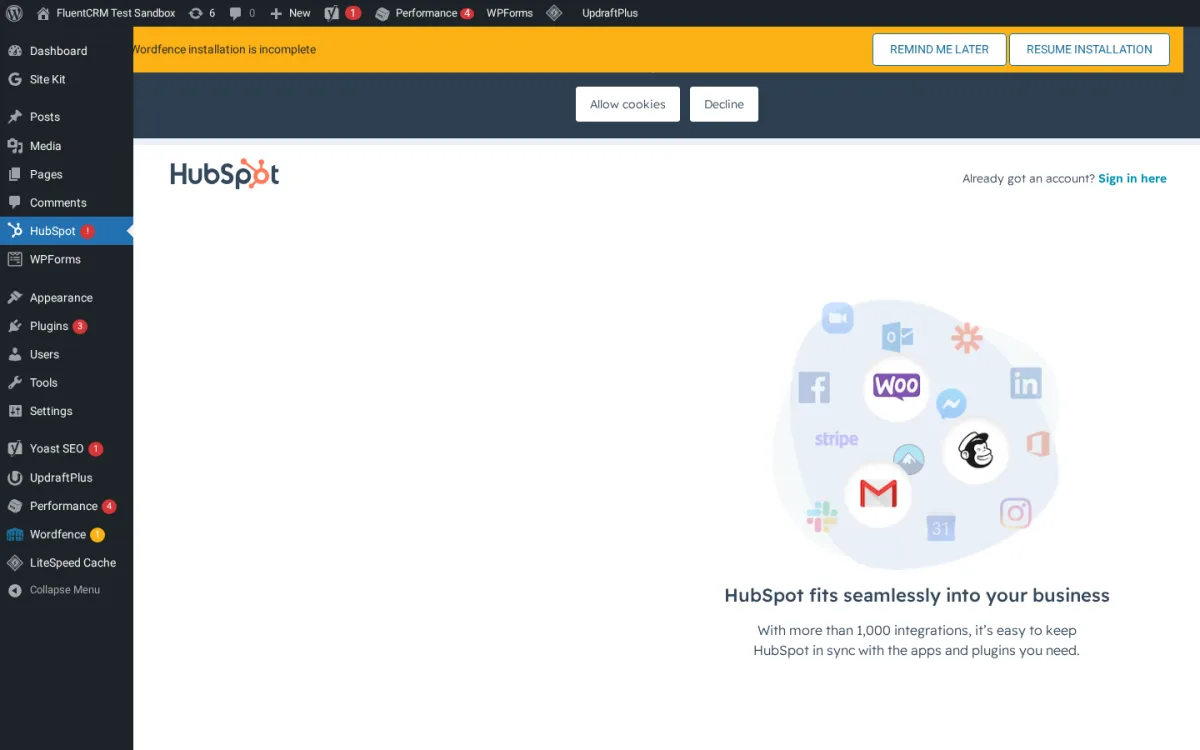
HubSpot's free WordPress plugin (HubSpot All-In-One Marketing) gives a small business one piece of software for four jobs that usually need four: a CRM, a form and popup builder, a newsletter/email marketing tool, and a live chat plus chatbot widget.
The free tier connects to your WordPress forms (yours or HubSpot's own), captures every submission into a real contact record, lets you send up to a few thousand marketing emails per month with a drag-and-drop builder, and runs a customizable live chat widget on the front end. For most small businesses, the free tier is genuinely enough for the first six to twelve months.
What I verified for this refresh. Current install count (200,000+), rating, tested-up-to (WP 6.9.4), and current version (11.3.45) on the live WordPress.org listing, plus the public HubSpot pricing page. Paid Marketing Hub plans are billed by contact volume and feature tier, with multiple plans listed; the table uses "Paid plans vary" rather than quoting a Starter price that may drift.
Behavior to expect on free. WordPress form submissions are captured as full HubSpot CRM contact records (including page source and UTM data where present). The drag-and-drop email builder has a usable monthly send allowance (around 2,000 emails/month in free). The live chat widget loads asynchronously and shows a small "Powered by HubSpot" badge.
Key limitation. The two visible ceilings on free are the email send cap (~2,000/mo) and the small chat-widget badge. Both lift on paid Marketing Hub plans; paid pricing is multi-tier on the vendor pricing page, so this article uses "paid plans vary" rather than quoting a single starting figure that may drift between checkouts.
8. Google Site Kit (analytics, Search Console, PageSpeed)
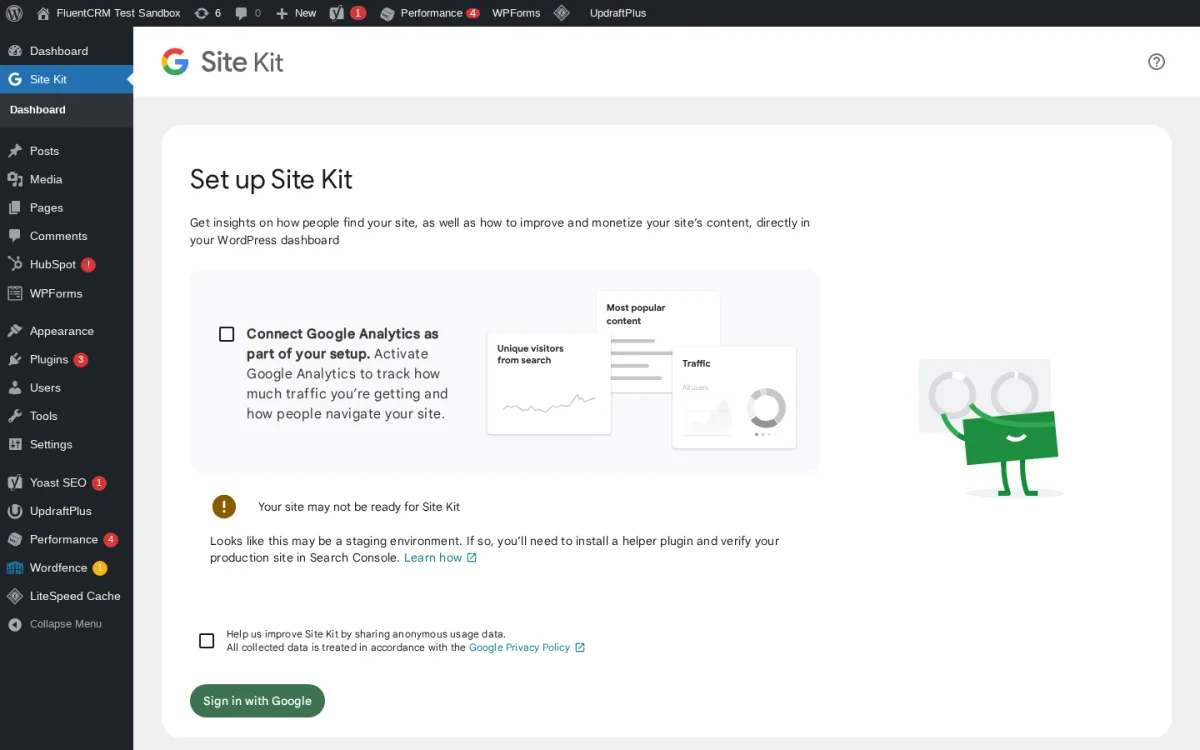
This is the one new addition to the 2026 list. Google's own Site Kit plugin connects your WordPress dashboard directly to Search Console, Google Analytics 4, PageSpeed Insights, AdSense (if relevant), and Tag Manager, with the official authentication flow. It is free, official, and the cleanest way to wire those services into WordPress.
What I verified for this refresh. Current install count and rating on the live WordPress.org listing, that the plugin remains 100% free, and the current four connector services (Search Console, Google Analytics 4, PageSpeed Insights, AdSense) on the official Site Kit documentation.
Behavior to expect. The plugin uses the official Google OAuth flow (no third-party connectors). Dashboard cards inside wp-admin show top queries, top pages, traffic over time, and Core Web Vitals status. For a business owner who does not want to learn the Search Console UI yet, those cards surface the most useful headline numbers.
Key limitation. Site Kit reports data; it does not change SEO or speed for you. Treat it as a window into Google's tools, not a replacement for an SEO plugin or a cache plugin. If you already use Yoast SEO or Rank Math, Site Kit pairs cleanly with both.
9. Booknetic (appointment booking)
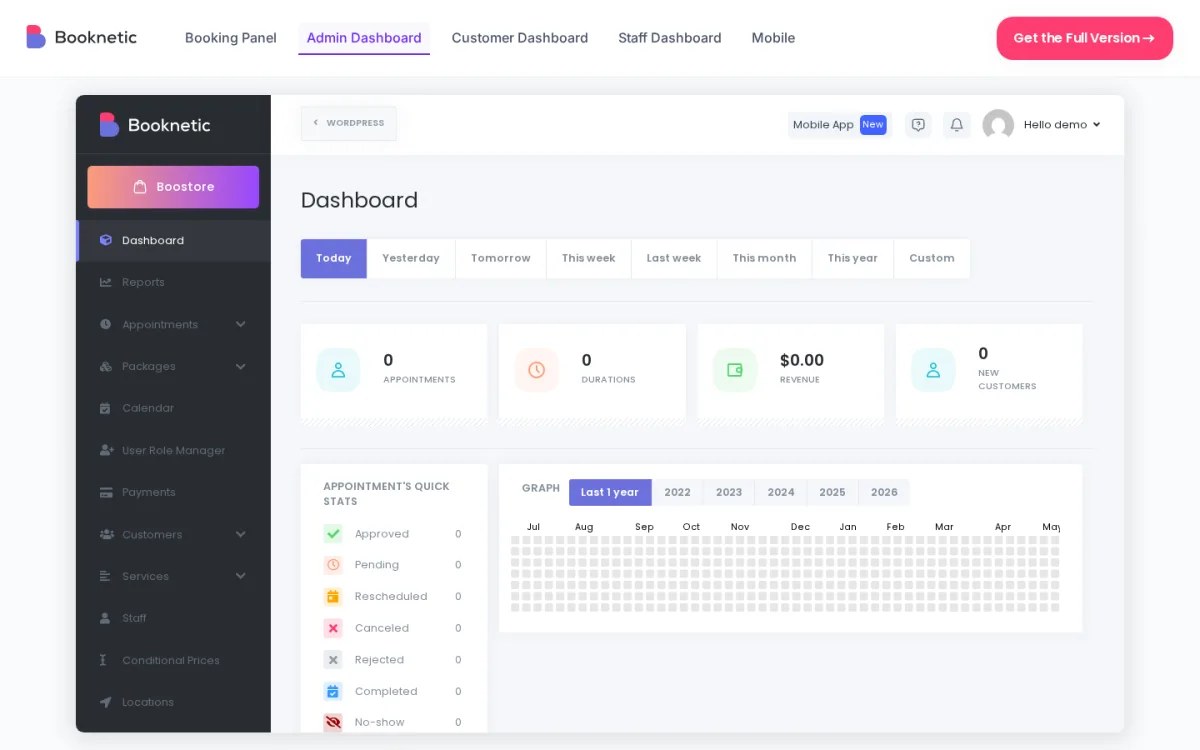
If the business sells time (consultations, services, classes, treatments), it needs an appointment booking system, and a built-in WordPress one beats sending people to a third-party calendar. Booknetic is the booking plugin we build at FS Code, and it is the natural pick for service-based business websites.
Out of the box, Booknetic handles a customizable booking widget, multi-staff calendars with their own working hours and pricing, customer accounts, automated email/SMS/WhatsApp/Telegram reminders, group bookings, recurring appointments, custom intake forms, taxes, coupons, invoices, and over 50 integrations (Zoom, Google Calendar, Stripe, PayPal, Mailchimp, Zapier, and more). A live demo at demo.booknetic.com lets you click through the admin before buying.
What I verified for this refresh. Booknetic is the booking plugin we build at FS Code, so I work inside the admin daily. For this refresh I re-checked the current Booknetic admin flow (service + staff + working hours + booking form), confirmed the front-end booking widget rendering, re-checked the current 50+ integrations list, and reviewed the live pricing page on 2026-05-24.
Behavior to expect. The booking widget is a single shortcode or block and matches theme styles without manual CSS. Multi-staff calendars with different working hours and per-staff pricing are configured entirely in the admin without code. Zoom, Google Calendar, Stripe, PayPal, Mailchimp, and Zapier integrations are first-class; a confirmed booking can auto-create a Zoom meeting when Zoom is configured. The 14-day money-back guarantee removes the buyer risk that paid-only plugins usually carry.
Key limitation. Booknetic is paid-only with no permanent free tier; evaluation runs through the live demo and the 14-day refund window. For businesses that genuinely never take appointments, this plugin is not essential and the other nine cover the stack.
Pricing (2026): Basic $45/year (1 site), Standard $99/year (1 site + staging), Premium $199/year (5 sites + staging), Elite $299/year (unlimited sites). One-time Lifetime tier also available. 14-day money-back guarantee.
For an honest side-by-side with Amelia, Bookly Pro, BookingPress, LatePoint, FluentBooking, and Simply Schedule Appointments, the best WordPress appointment booking plugins guide breaks down the seven main options.
10. FS Poster (social media auto-posting)
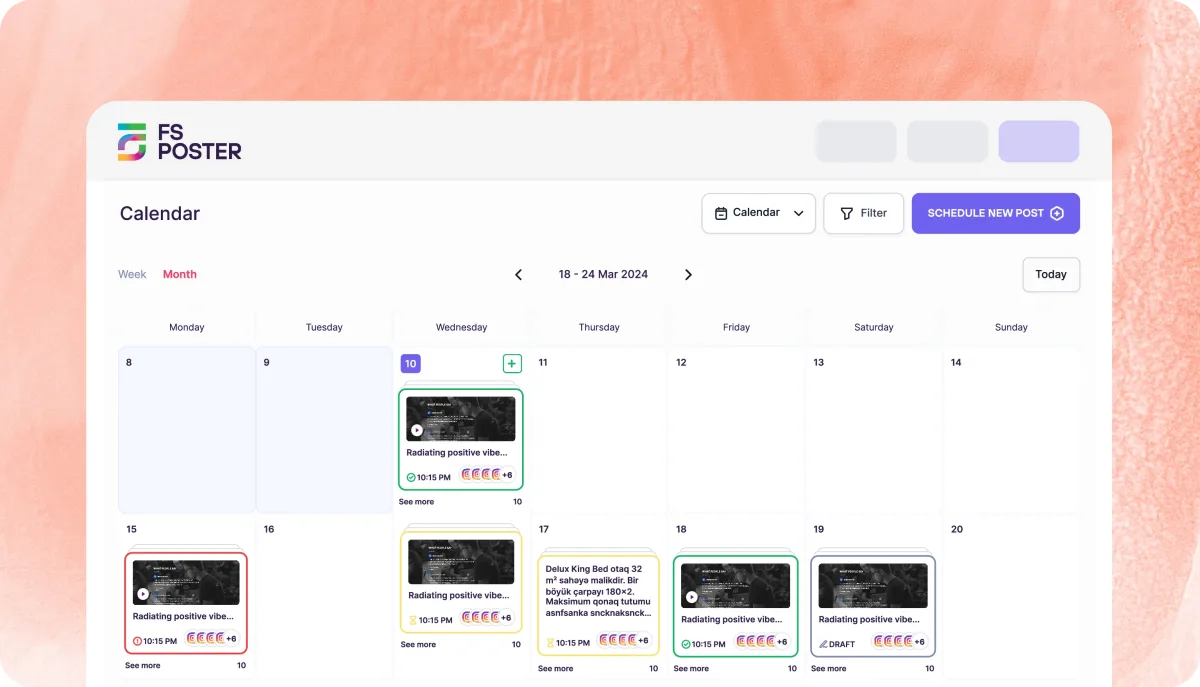
The last essential is the one that turns publishing into a marketing system. FS Poster is the auto-posting and scheduling plugin we build at FS Code. It auto-shares new WordPress posts (and existing ones, on demand) to 26 social networks and services in 2026, including Facebook, Instagram, X, LinkedIn, Pinterest, TikTok, YouTube, Threads, Bluesky, Mastodon, Reddit, Telegram, Medium, Discord, VK, and Google Business.
The plugin includes a content planner with daily and hourly intervals, a calendar view, an AI-assisted caption and hashtag generator, per-network content customization (different image, copy, or link per platform), and webhook integration for Zapier and IFTTT. Native commenting capture (Facebook comments mirror into WordPress post comments) is included.
What I verified for this refresh. FS Poster is the auto-posting plugin we build at FS Code. For this refresh I re-checked the current FS Poster admin and confirmed that supported destinations now cover 26 social networks and services in 2026 (Facebook, Instagram, X, LinkedIn, Pinterest, TikTok, YouTube, Threads, Bluesky, Mastodon, Reddit, Telegram, Medium, Discord, VK, Google Business, and more). I also re-checked the planner/calendar view, per-network content customization, and the live pricing page on 2026-05-24.
Behavior to expect. Connecting accounts is a one-click OAuth handshake per network on supported platforms. Per-network customization means you can send a square image to Instagram, a 16:9 image to X, and a different headline to LinkedIn from one WordPress post. Native Facebook comment capture mirrors into WordPress post comments.
Key limitation. FS Poster is paid-only; the intro prices are honest about regular renewal rates (Single $58 intro, $65 regular, and so on). A few destination networks (Pinterest and Reddit in particular) have tightened their API access since 2024 and require you to register your own developer app; the FS Poster docs walk through that setup.
Pricing (2026): Single $58/year intro ($65 regular) for 1 site, Plus $109/year intro ($195 regular) for 3 sites, Developer $229/year intro ($449 regular) for 15 sites. Lifetime $490 intro ($890 regular) covering 30 sites. 14-day no-questions-asked refund.
If you want to see how it compares with Blog2Social, Jetpack Social, and the broader category, the best WordPress social media plugins parent roundup covers auto-posting alongside social feeds and share buttons.
What changed from the 2022 version
If you read the previous version of this article, here is the honest changelog so you know what was updated and why.
- Returns and refunds plugin removed. The 2022 version included a WooCommerce-specific RMA plugin as one of ten "essentials". That made sense only for stores. It has been replaced with Google Site Kit, which is essential for every business website regardless of category.
- Backup pick swapped. The previous backup recommendation has been replaced with UpdraftPlus, which is the most-installed and best-reviewed free backup plugin in 2026 (3+ million sites, 4.8 rating).
- Caching expanded. Caching is now a two-option recommendation (LiteSpeed Cache on LiteSpeed hosts, W3 Total Cache everywhere else) instead of a single pick, because where you host now changes the right answer.
- All affiliate redirects removed. Old Envato and ShareASale affiliate buttons under Booknetic, FS Poster, WPForms, and ShortPixel were replaced with clean product homepage and WordPress.org links.
- FS Poster network count updated. The 2022 article said "14 social networks". FS Poster now supports 26 networks and services in 2026.
- Wordfence free-tier wording corrected. The 2022 article and earlier drafts implied a "real-time" threat feed on free; the free tier actually receives the Threat Defense Feed on a 30-day delay, and the curated IP blocklist plus country blocking are Premium features. The article now states the current split correctly.
- WPForms Lite entry-storage caveat added. Lite delivers form submissions by email and does not save entries to the WordPress database by default. The article now calls this out as the headline free-tier limitation and explains the optional Lite Connect cloud backup.
- HubSpot pricing language tightened. The comparison table now says "Paid plans vary" instead of a marketing tagline. The free tier remains a real, day-one option for most small business sites; paid Marketing Hub plans are billed by contact volume and tier on the HubSpot pricing page, so a single "starts at $X" number can shift between checkouts.
Frequently asked questions
How many WordPress plugins should a business website have?
There is no hard cap, but well-maintained sites usually keep the active plugin count between 15 and 25. Each plugin is code you have to keep updated and trust for security. The 10 picks in this guide were chosen so a small business site can cover every essential job without bloating the plugin list.
Do free WordPress plugins slow down my site?
Not by themselves. A slow site is almost always caused by a small number of badly-written plugins or by uncompressed media, not by the total plugin count. Sticking to actively maintained plugins from reputable vendors (like the ones in this list) and pairing them with a real caching plugin and image optimizer is the simple combination that fixes most speed issues.
Which is better in 2026, Yoast SEO or Rank Math?
Both are good. Yoast SEO is the safe default with the broadest support footprint and the strongest brand. Rank Math has been catching up fast on the free side, with more schema types and unlimited focus keywords. If you already use Yoast and it works for you, do not switch. If you are starting from scratch and want more features in the free tier, Rank Math is a fair alternative.
Do I really need a separate security plugin if my host has its own protection?
Most hosts only protect the server. A WordPress security plugin like Wordfence protects WordPress: login attempts, plugin and theme vulnerabilities, malicious file injection, and credential stuffing. The two layers do not overlap, so running both is normal.
Does WPForms Lite save my form entries inside WordPress?
No. WPForms Lite delivers submissions by email and does not save form entries to the WordPress database by default. If a notification email gets filtered or your outbound mail breaks, that submission is lost unless you enable the optional Lite Connect cloud backup feature or upgrade to a Pro tier (which stores entries in the WordPress database).
Can I run two caching plugins to be faster?
No. Two caching plugins almost always conflict (each thinks it owns the cache) and at best cancel each other out. Pick one (LiteSpeed Cache if your host runs LiteSpeed, W3 Total Cache otherwise) and stop there.
Is HubSpot really free for small business websites?
The HubSpot WordPress plugin and the free CRM tier are genuinely free, with no time limit. The free tier covers forms, popups, live chat, basic chatbots, contact management, and a usable amount of email marketing per month. Paid Marketing Hub tiers are optional and only start to make sense once you are sending much higher email volumes or need advanced automation; pricing varies by contact tier on the HubSpot site.
Do I need an appointment booking plugin if my business is not service-based?
No. Booknetic is in this list specifically for service businesses (clinics, consultants, trainers, salons, agencies offering discovery calls). If your business does not take appointments, skip it; the other nine plugins still apply.
Final recommendation
For a brand-new WordPress business website in 2026, install in this order: Yoast SEO, a caching plugin (LiteSpeed Cache or W3 Total Cache depending on host), Wordfence, UpdraftPlus, ShortPixel, WPForms, HubSpot, and Google Site Kit. That gets you SEO, speed, security, backups, image optimization, forms, marketing, and analytics covered with one official or near-official plugin each.
If you sell time, add Booknetic. If you publish content and want it on social networks automatically, add FS Poster. That is the full ten. None of these picks lock you in; every one has a real free tier or a real money-back guarantee, so you can swap any of them out without losing the site.
One layer worth adding on top in 2026 is web accessibility. With the European Accessibility Act enforcement deadline now in the past and U.S. ADA Title III lawsuits still being filed every week, a small business site benefits from at least one in-editor WCAG scanner plus a visitor-facing toolbar. Our roundup of the best WordPress accessibility plugins compares the free and paid options (Equalize Digital Accessibility Checker, WP Accessibility, Ally, AccessiYes, OneTap, UserWay, and accessiBe) so you can pick the right scanner plus widget combination without overpromising legal compliance.
Similar Blogs


