

Best Video Editing Software for WordPress Bloggers in 2026


Why a WordPress blogger needs a real video editor in 2026
If you run a WordPress blog in 2026, video has stopped being optional. Search results now mix in YouTube cards above the fold for product, how-to, and review queries; pairing written content with a useful embedded video can improve how genuinely helpful the page is and open up extra SERP surfaces (the Videos tab, video-rich results, and discovery feeds); and the people you want to reach are spending hours per day inside short-form feeds (Shorts, Reels, TikTok) that are powered by edited clips, not raw recordings.
The good news is that you do not need a Hollywood budget to keep up. The seven video editors below cover every realistic scenario for a WordPress blogger: professional long-form editing, Mac-only premium workflows, free-but-pro-grade color and audio, beginner-friendly drag-and-drop editors, short-form social cutting, and pure free-and-open-source.
A quick note on intent: this article is about creating the video you will use on your site. If your goal instead is displaying YouTube videos inside WordPress (galleries, channel feeds, autoplay grids), the right post for that is our best YouTube WordPress plugins roundup.
How I picked these video editors
I shortlisted the candidates from the top SERPs for "best video editing software for bloggers," "best video editor for YouTube," and "best video editor for WordPress" in May 2026, then narrowed to the seven that meet all of the following:
- Still in active development in 2026 (recent release notes in the last 6 months).
- Realistic learning curve for a WordPress blogger who is not a full-time editor.
- Useful export profiles for YouTube, Shorts, Reels, and embeddable MP4/WebM.
- Honest pricing (no "starting at" prices that hide the real total).
- Native macOS support or native Windows support, ideally both.
For every paid editor I checked the current vendor pricing page (not third-party listings) on 2026-05-24, and for every editor I looked at the most recent UI walkthroughs to confirm the feature lists below are current and not the 2022 marketing pitch.
Why edit video at all for a WordPress blog
The headline reasons a blogger picks up a real video editor in 2026:
- Start a YouTube channel and monetize the same content you already write.
- Embed first-party video on WordPress posts to make the page genuinely more useful, improve on-page engagement, and open up extra SERP coverage (the Videos tab and video-rich snippets in regular search). For the broader on-page checks that go alongside this, see our 13 SEO tips for blog posts checklist.
- Repurpose long-form video into short-form clips for Shorts, Reels, and TikTok, where most discovery now happens.
- Produce paid social ads that look professional enough to compete with mid-size brands.
- Record screen tutorials, product walkthroughs, and demos for your WordPress plugins, themes, or services.
If none of those describe what you do, you can stop here and use your phone's built-in editor. If even one does, you want a real editor.
At a glance comparison
| Editor | Best for | OS | Free version | Starting paid price (2026) | Standout strength |
|---|---|---|---|---|---|
Adobe Premiere Pro | Professional long-form editing | Mac, Windows | 7-day trial | $22.99/ | Text-Based Editing and the full Adobe ecosystem |
Final Cut Pro for Mac | Apple-first creators with M-series Macs | Mac only | 90-day trial | $299.99 one-time, or $12.99/ | Native Apple Silicon speed and Magnetic Mask |
DaVinci Resolve 21 | Color grading and pro-grade free editing | Mac, Windows, Linux | Yes, fully featured | $295 one-time for Studio | Color, Fusion VFX, and Fairlight audio in one app |
Wondershare Filmora 14 | Beginners and creators who want fast templates | Mac, Windows | Yes, with watermark | $59.99/ | AI Copilot, Text to Video, and a huge effects library |
Movavi Video Editor 2026 | Budget-friendly all-rounder | Mac, Windows | Yes, with watermark | From around $69.95/ | Friendly UI, fast learning curve, low CPU footprint |
CapCut | Short-form creators (Shorts, Reels, TikTok) | Mac, Windows, web, mobile | Yes, generous | CapCut Pro subscription (price varies by region, device, and promo; check the in-app upgrade screen) | Best-in-class auto-captions and trending templates |
Shotcut 25.x | Bloggers who refuse subscriptions | Mac, Windows, Linux | Yes, fully free open source | $0 | No account, no watermark, no upsell |
If your next step after editing is publishing the clip to multiple channels at once, our best WordPress social media plugins roundup covers auto-posting plugins that push the same video to your audience on multiple networks.
1. Adobe Premiere Pro (Mac and Windows)
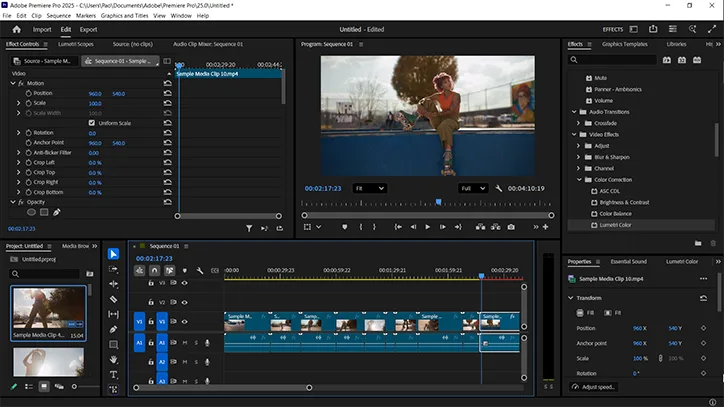
Adobe Premiere Pro is still the default professional choice in 2026. It is the editor most film, TV, and YouTube studios actually use, and it integrates tightly with Photoshop, Lightroom, After Effects, and Audition through Creative Cloud.
What stands out in the current version:
- Text-Based Editing: Premiere Pro transcribes your footage and lets you edit the timeline by deleting words from the transcript. It is the single biggest workflow improvement for talking-head and podcast videos in the last two years.
- Enhance Speech: AI-powered cleanup of dialogue (background noise, room tone, mic distance) that for many bloggers replaces a dedicated audio editor.
- Generative Extend (Firefly-powered): extend a clip by up to two seconds when you cut a frame too short. GA since 2025.
- Auto Reframe: reflow a 16:9 timeline to vertical (9:16) or square (1:1) for Shorts, Reels, and TikTok without re-cutting.
- Color Match: match the look of one clip to another, the easiest way to keep multi-camera shoots visually consistent.
Pros and cons (my take after testing):
| Pros | Cons |
|---|---|
| Industry-standard timeline that any freelance editor will know | Subscription only; you never own the software |
| Deepest ecosystem (Photoshop, After Effects, Audition, Frame.io) | Heavy on CPU and disk; older laptops struggle with 4K timelines |
| Text-Based Editing is a real time-saver for blog/ | Learning curve is steep if you are starting from a phone editor |
| Generative Extend and Enhance Speech are unique to Adobe | Annual commitment is the only sane price; monthly is expensive |
Key specs: Unlimited tracks, multicam editing, 4K and 8K editing, H.265 (HEVC) and H.266 (VVC) export, ProRes RAW, full color management.
Pricing (US, checked 2026-05-24 on adobe.com/products/premiere/plans.html):
Adobe's plan page currently shows two relevant individual tiers, and the two columns matter: there is a "regular price" (what the plan renews at, billed monthly on an annual commitment) and a separately listed promotional offer (a discounted first month or first three months) that Adobe rotates throughout the year. The numbers below are the regular renewal prices; expect the first-month or first-3-month price you see at checkout to be lower than this.
- Premiere Pro single app, annual plan (billed monthly): $22.99/month regular price (or $263.88 prepaid annually). Promotional first-month/first-3-month pricing varies; check the Adobe checkout for the current offer.
- Premiere Pro single app, month to month: higher than the annual rate (around $34.49/month at the last public check); Adobe lists this as the "no commitment" option.
- Creative Cloud Pro (the renamed multi-app plan, formerly "All Apps"), annual plan (billed monthly): $69.99/month regular price. Promotional first-month/first-3-month pricing is shown separately on the plans page.
- Free 7-day trial available.
Adobe revises both the regular and promo prices on a rolling basis. Treat the numbers above as a snapshot and click through to the official plans page before committing.
Best for: Bloggers who plan to edit long-form video weekly, want a professional-grade timeline, and already use other Adobe apps. If your YouTube content is your business, Premiere Pro is the safest investment.
2. Final Cut Pro for Mac (Mac only)
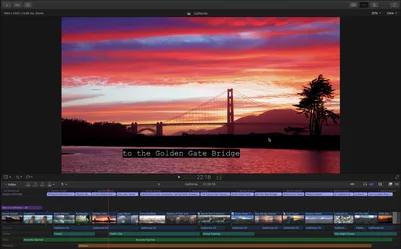
If you are on a modern Apple Silicon Mac, Final Cut Pro is the fastest editor you can buy. It is the editor a huge slice of the top YouTube channels use day to day, and it is the only editor whose performance jumps noticeably when you upgrade to an M3 or M4 Mac.
What stands out in the current version (Final Cut Pro 11):
- Magnetic Mask: isolate a person or object across a clip with a single click. The cleanest implementation of object masking in any consumer editor.
- Live Drawing: draw and annotate on top of your footage with the Apple Pencil on an iPad, then sync back to Final Cut Pro on Mac.
- Enhance Light and Color: AI-based color and exposure correction that produces usable results without manual scopes.
- Spatial video editing: edit immersive Apple Vision Pro content directly in the timeline if that is your audience.
- Object Tracker and Smart Conform: track objects across cuts and auto-resize the project for vertical or square delivery.
Pros and cons:
| Pros | Cons |
|---|---|
| Native Apple Silicon performance; fastest renders on M-series Macs | Mac only; no Windows or Linux version |
| One-time purchase or affordable Creator Studio bundle | Magnetic timeline is divisive; some editors love it, some never adjust |
| Tight integration with Motion (titles) and Compressor (export) | Color grading is good but still behind DaVinci Resolve |
| Strong export presets for YouTube, Instagram, and Vision Pro | No real ecosystem of third-party plugins compared to Premiere Pro |
Key specs: Magnetic timeline, multicam (up to 64 angles), 4K and 8K, ProRes and ProRes RAW, 360-degree footage, HDR (Dolby Vision), Spatial video.
Pricing (US, checked 2026-05-24 on apple.com):
- Final Cut Pro for Mac, one-time purchase: $299.99 from the Mac App Store.
- Apple Creator Studio subscription (added in 2024): $12.99/month or $129/year. Includes Final Cut Pro for Mac, Final Cut Pro for iPad, Logic Pro for Mac, and Logic Pro for iPad.
- Free 90-day trial available from the Apple website.
Best for: Mac-first bloggers and YouTubers who want maximum performance per dollar and prefer to own their software. If you already have an M-series Mac and you are not committed to the Adobe ecosystem, Final Cut Pro is the most pragmatic choice.
3. DaVinci Resolve 21 (Mac, Windows, and Linux)
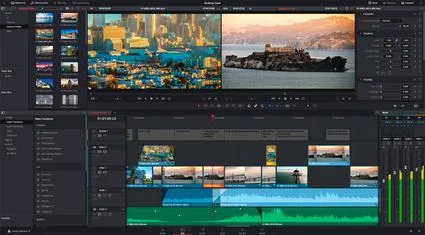
DaVinci Resolve is the most unusual product in this list: it is a full professional editor (used on feature films for color grading) that ships with a fully featured free version. For most WordPress bloggers, the free version is genuinely all you need.
What stands out in DaVinci Resolve 21:
- Seven dedicated pages: Media, Cut, Edit, Fusion, Color, Fairlight, and Deliver. You can edit, do motion graphics, color grade, mix audio, and master, all without leaving the app.
- IntelliTrack and Multi-Point Tracking: AI-based object and point tracking that survives occlusion and camera movement.
- DaVinci Neural Engine: Studio-only features like AI Audio Transcription, Voice Isolation, Audio Classifier, Magic Mask, and Super Scale (upscale SD or HD footage to 4K).
- Cut page: a streamlined fast-edit page designed for quick turn-around social and YouTube cuts.
- Fairlight audio: a complete DAW inside the editor, with surround, Dolby Atmos, and immersive mixing.
Pros and cons:
| Pros | Cons |
|---|---|
| The free version is genuinely usable; not a stripped trial | Demands a real GPU; integrated graphics will struggle |
| Industry-grade color grading included | The seven-page UI is a lot to learn at first |
| One-time payment for Studio (no subscription) | Some advanced AI features are Studio-only |
| Works on Windows, macOS, and Linux | Project file sizes get large fast on long projects |
Key specs: Unlimited tracks, multicam, 4K and 8K, 360-degree VR content, H.265, Fusion VFX, Fairlight audio, Color page with full DaVinci nodes.
Pricing (US, checked 2026-05-24 on blackmagicdesign.com):
- DaVinci Resolve (free): full editing, basic color, basic Fairlight, basic Fusion.
- DaVinci Resolve Studio: $295 one-time, ever. Adds the Neural Engine, advanced noise reduction, HDR grading, multi-user collaboration, and codecs beyond the free tier's limits.
Best for: Bloggers with a capable desktop or workstation who want a professional-grade editor without a subscription. If you only need basic color grading, you can stay on the free version forever and still publish broadcast-quality video.
4. Wondershare Filmora 14 (Mac and Windows)
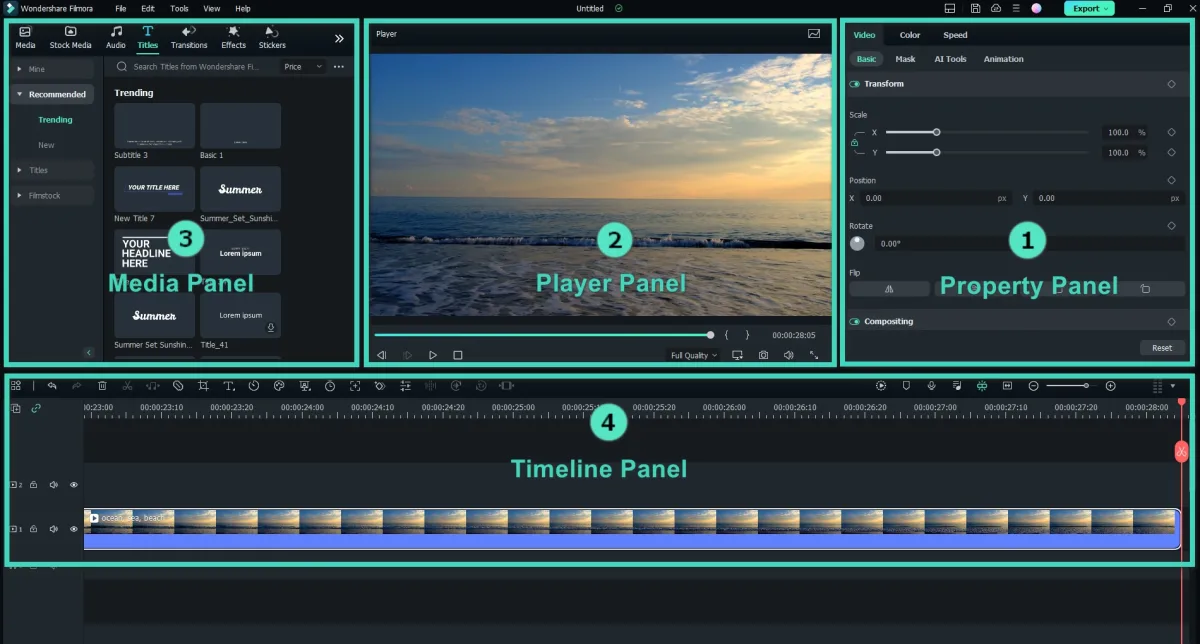
Wondershare Filmora is the editor I recommend most often to bloggers who say "I do not want to learn video editing, I just want to cut a clip." It has the shortest learning curve of any paid editor in this list and the largest library of templates, transitions, and effects.
What stands out in Filmora 14:
- AI Copilot Editing: an in-app assistant that suggests effects, trims, and transitions based on what you are doing.
- AI Smart Cutout: background removal without a green screen, similar in concept to FCP's Magnetic Mask.
- AI Text to Video: turn a written prompt or your blog post into a draft video using stock footage.
- AI Vocal Remover and AI Audio Denoise: clean dialogue and isolate or remove music vocals.
- Stock library inside the editor: built-in access to royalty-free stock video, audio, and effects (subset is free, more inside the Bundle).
Pros and cons:
| Pros | Cons |
|---|---|
| Friendliest UI in the paid tier | Free tier exports add a Filmora watermark |
| Massive effects, titles, and template library | AI features are good but not as deep as Adobe's or DaVinci's |
| Both subscription and perpetual license offered | Some advanced color and audio tools missing |
| Cross-platform with mobile companion app | Perpetual license only includes the version you bought |
Key specs: Up to 100 video tracks, motion tracking, keyframing, basic color grading, AI tools, mobile and desktop apps.
Pricing (US, checked 2026-05-24 on filmora.wondershare.com):
- Individual Annual plan: $59.99/year (was $69.99); includes one year of updates.
- Individual Monthly plan: about $19.99/month.
- Perpetual License: $89.99 one-time; you own the current version forever but do not get future version upgrades.
- Bundle plan (Filmora + Filmstock Standard): $109.99/year.
- Free version available; exports include a watermark.
Best for: Beginners and intermediate bloggers who want professional-looking results fast and do not need the deepest pro tools. If you publish weekly video on a blog and do not want to spend a weekend learning a timeline, Filmora is the right starting point.
5. Movavi Video Editor 2026 (Mac and Windows)
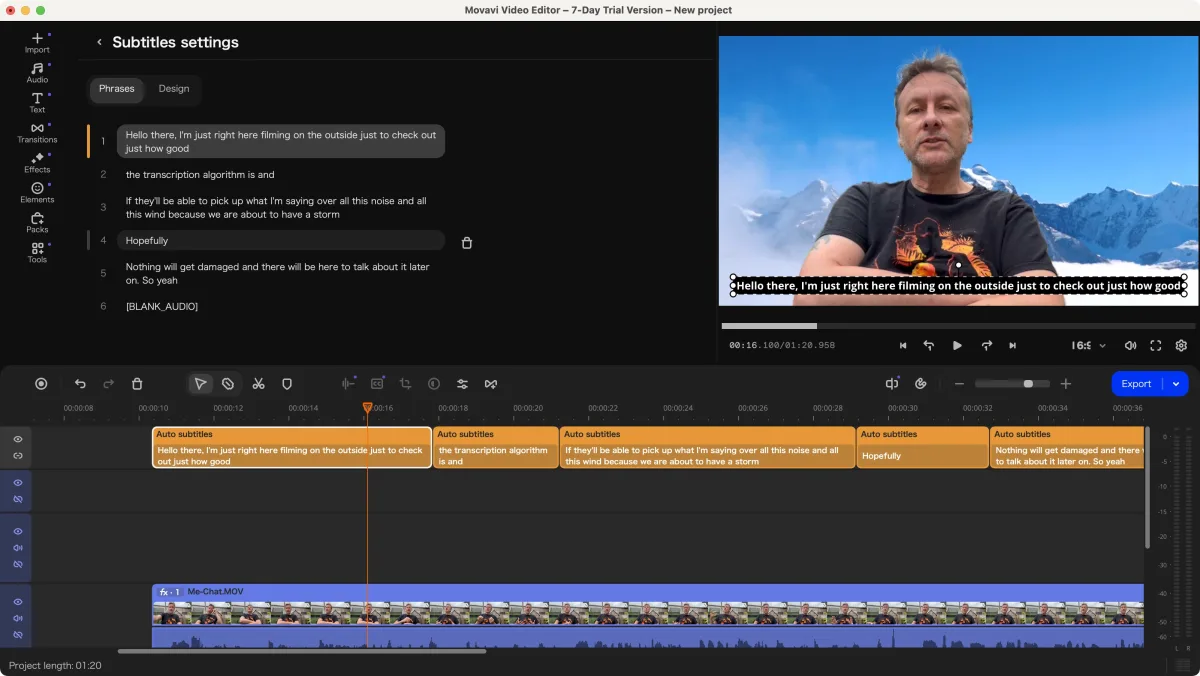
Movavi Video Editor sits in the same beginner-friendly lane as Filmora, but with a stripped-down UI that some users prefer. It is the most budget-conscious of the paid editors in this list and runs well on lower-spec hardware.
What stands out in Movavi Video Editor 2026:
- Quick Movie wizard: drop in clips, pick a style, and Movavi assembles a draft edit. Useful for first cuts.
- AI Background Removal and Motion Tracking: core AI features without the price tag of Adobe.
- Chroma key: green screen support that actually works on consumer-grade green panels.
- Intro and outro templates: large library aimed at vloggers and YouTubers.
- Native Apple Silicon and Windows ARM support: runs natively on M-series Macs and modern Windows on ARM laptops.
Pros and cons:
| Pros | Cons |
|---|---|
| Lowest CPU and RAM footprint of any paid editor in this list | Lacks the depth of features of Premiere Pro and DaVinci Resolve |
| Clean, beginner-friendly UI | Free trial exports include a watermark and limit project length |
| Affordable annual subscription | Stock and AI extras are pushed via paid add-ons |
| Fast, lightweight installer | Audio editing is basic compared to Fairlight or Audition |
Key specs: Unlimited tracks, motion tracking, chroma key, picture-in-picture, 4K, H.265, animated titles, basic color correction.
Pricing (checked 2026-05-24 on movavi.com; Movavi rotates promotional discounts and shows different currencies by region):
- Movavi Video Editor 2026, 1-month subscription: around $19.95/month at the time of the re-check, shown as a discounted promo on the US purchase page.
- Movavi Video Editor Plus 2026, 1-year subscription: around $69.95/year on the US purchase page (around €55.95/year on the localized EU page, including VAT).
- Movavi Video Suite Plus 2026 (Video Editor + Screen Recorder + Video Converter), 1-year: around $79.95/year (around €75.95/year on the EU page).
- 7-day free trial.
Movavi's pricing fluctuates with seasonal promotions and the currency you see depends on your region; click through to the buy page in your country before checkout.
Best for: Bloggers on Windows or older Macs, hobbyist YouTubers, and anyone who wants a simple paid editor that does not punish slower laptops.
6. CapCut (Mac, Windows, web, and mobile)
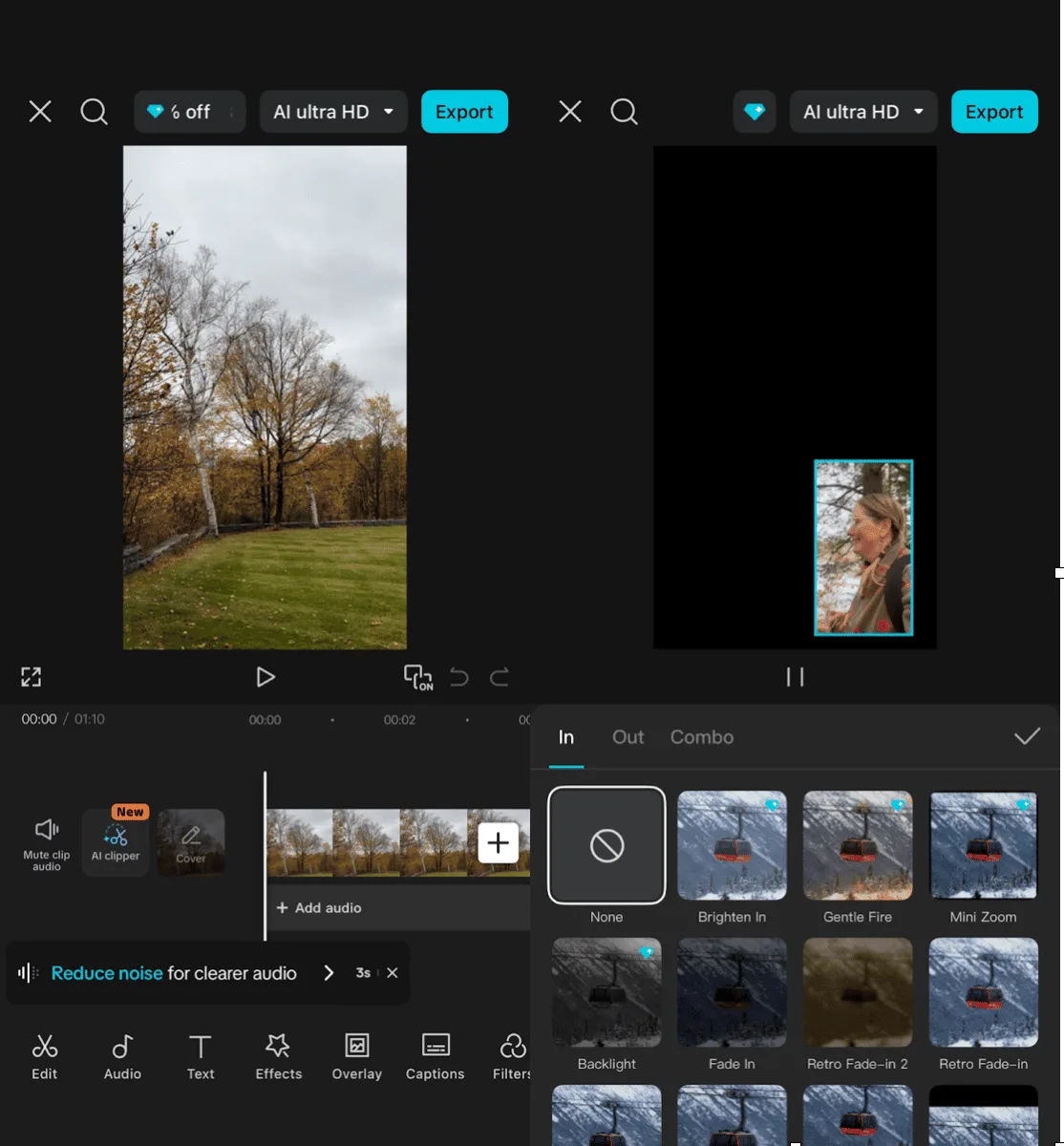
CapCut was a phone-first editor when the 2022 version of this article was written; in 2026 it is one of the most popular video editors in the world and arguably the single best free desktop editor for short-form social content. Owned by ByteDance (the same company behind TikTok), CapCut ships with a deep set of features that used to belong only to paid editors.
What stands out in 2026:
- Auto Captions and translation: the best automated subtitle quality of anything in this list, in dozens of languages.
- Templates pulled from trending TikToks: you can rebuild a viral edit by swapping in your own clips.
- AI-powered tools: Smart Cutout (background remove), Text to Speech, AI Avatars, AI Effects, Long Video to Shorts.
- Cross-device sync: start a project on the phone, finish it on the desktop, export from the web.
- Native vertical timeline: built around Shorts, Reels, and TikTok dimensions out of the box.
Pros and cons:
| Pros | Cons |
|---|---|
| Most generous free tier of any editor in this list | Privacy and ownership: ByteDance is the parent company; some teams will not allow CapCut |
| Best-in-class auto-captions | Templates and trending music create a "CapCut look" that can feel generic |
| Cross-platform with seamless mobile-to-desktop sync | Free tier limits some AI features to a credit pool |
| Built for vertical short-form, where most discovery now happens | Desktop UI is less mature than Premiere Pro or Final Cut Pro for long-form work |
Key specs: Multi-track timeline, 4K export, vertical and horizontal projects, auto captions, motion tracking, keyframing, AI effects, free stock library.
Pricing (checked 2026-05-24; CapCut's own help docs state that Pro pricing varies by region, device, and active promotion):
- CapCut free: full editor, watermark only if you use specific Pro-tier templates or AI features.
- CapCut Pro for Individuals: subscription, billed monthly or annually. Exact price depends on where you sign up (capcut.com web, the desktop app, the iOS App Store, or Google Play) and on any active promo. As an example, a US web sign-up was around $7.99/month at the last check. CapCut's official guidance is to confirm the current price on the in-app or web upgrade screen at sign-up.
- CapCut for Teams: per-seat pricing on the CapCut for Business page.
- Mobile app: free with an optional in-app Pro subscription.
Best for: Bloggers who push short-form video to TikTok, YouTube Shorts, Instagram Reels, and Facebook Reels alongside their WordPress posts. If 80% of your video work is under 60 seconds, CapCut is probably the right primary editor.
7. Shotcut 25 (Mac, Windows, and Linux)
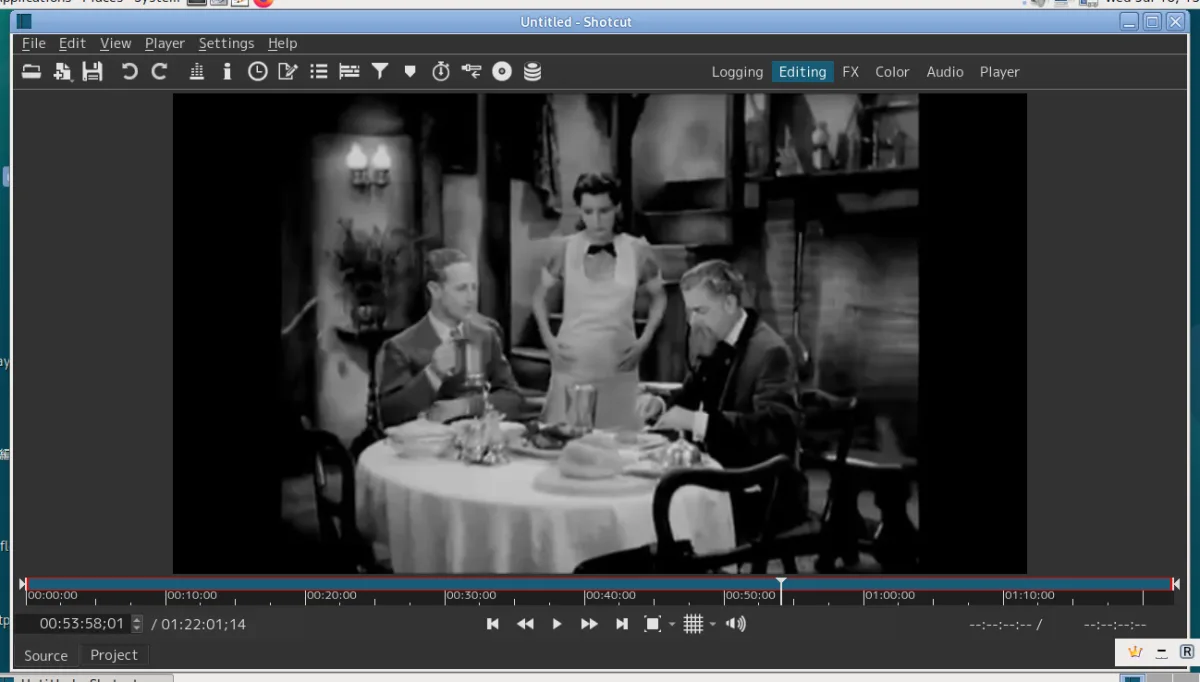
Shotcut is the most credible fully free, fully open-source editor in 2026. It is maintained by Meltytech, ships without a watermark, does not require an account, and works on every desktop OS including Linux.
What stands out in the Shotcut 25.x series:
- No subscription, no watermark, no upsell: what you download is the entire product.
- Wide format support: built on FFmpeg, so it opens almost any file you throw at it.
- Multitrack timeline with keyframes: real editing, not toy editing.
- Network and HiDPI support: plays nicely with modern displays and remote storage.
- GPU effects (experimental) and proxy editing: keeps performance reasonable on older hardware.
Pros and cons:
| Pros | Cons |
|---|---|
| 100% free, 100% open source, no account required | UI looks dated next to Filmora, CapCut, or Premiere Pro |
| Works on Windows, macOS, and Linux | No AI tools (transcription, mask, denoise, etc.) |
| Strong FFmpeg-based format support | Smaller plugin/ |
| Sensible for privacy-conscious creators | Not the right tool for fast template-driven social cuts |
Key specs: Multitrack editing, keyframes, color grading, audio mixing, JACK and ALSA audio (Linux), 4K, broad codec support, no watermark.
Pricing: Free. No paid tier.
Best for: Bloggers who refuse subscriptions on principle, Linux users, and anyone editing on hardware too old for CapCut Pro or Filmora.
How to choose
Pick the editor that matches your single biggest constraint, not the one with the most features.
- You earn a living from your video content and you want one editor for ten years: Adobe Premiere Pro.
- You own a recent Mac and you want maximum speed per dollar: Final Cut Pro for Mac, with the $299.99 one-time option if you prefer to own software, or the Apple Creator Studio bundle if you also want Logic Pro.
- You want a professional editor but you do not want a subscription, and you have a capable desktop: DaVinci Resolve 21 (free), upgrade to Studio later if AI tools matter.
- You are a beginner and your time is more valuable than your money: Wondershare Filmora 14.
- You want a paid editor that runs well on a modest laptop: Movavi Video Editor 2026.
- Most of your video is short-form for TikTok, Shorts, and Reels: CapCut (free tier first, upgrade to Pro if you hit the AI credit ceiling).
- You want zero subscriptions and zero account creation: Shotcut.
What you should not do is buy Premiere Pro on the assumption that "the pros use it" if you only publish a short-form clip every other week. Match the tool to the workload.
Things to consider before you commit
Before you pay anything, run through this short checklist:
- What kind of video are you actually producing? Long-form tutorials, vlogs, product reviews, short-form social, screen recordings, and webinars all favor different editors.
- What operating system do you have, and what is its real performance? Older Intel Macs and Windows laptops with integrated graphics will struggle with Premiere Pro and DaVinci Resolve.
- What file formats and codecs do you record? Most modern cameras record H.265 or ProRes; all seven editors handle the common cases, but only DaVinci Resolve and Premiere Pro handle the edge cases well.
- How much do you really need transitions, effects, and templates? Filmora and CapCut win here; Premiere Pro and Final Cut Pro have smaller built-in libraries.
- How comfortable are you with timelines and keyframes today? If the answer is "not at all," skip Premiere Pro and DaVinci Resolve for now.
Frequently asked questions
What is the best free video editing software for WordPress bloggers in 2026?
For most bloggers, DaVinci Resolve (free) is the most powerful no-cost editor and CapCut is the most beginner-friendly. DaVinci Resolve covers professional editing, color, and audio work on capable desktops; CapCut covers fast short-form social cuts on any device, including the web. Shotcut is the right answer if you want fully open source with no account.
Do I need video editing software if I just embed YouTube videos on my WordPress site?
If you only ever embed other people's YouTube videos, no, a basic embed plugin is enough. If you publish your own video (even short clips, tutorials, or repurposed reels) you will get better engagement and lower bounce rates with edited video than with raw camera output. For the embed-only use case, see our best YouTube WordPress plugins roundup instead.
Can I edit videos directly inside WordPress?
No, and you should not try. WordPress is a publishing platform, not a non-linear editor. Edit on the desktop in one of the seven editors above, export an MP4 or WebM, and upload to your site or to YouTube and embed. Self-hosting large video files on your WordPress server is also bad for site speed; see our WordPress speed optimization guide for the full reasoning and the recommended setup.
What video editing software do YouTubers actually use?
Most full-time YouTubers in 2026 use one of three editors: Adobe Premiere Pro, Final Cut Pro for Mac, or DaVinci Resolve. Premiere Pro wins for cross-platform teams; Final Cut Pro wins for Mac-only solo creators who want speed; DaVinci Resolve wins when color grading is central to the channel's look. CapCut is now standard for short-form YouTube Shorts work.
Is Final Cut Pro a subscription or a one-time purchase?
Both, as of 2024. The Final Cut Pro for Mac one-time purchase is still $299.99 from the Mac App Store. Apple also introduced the Apple Creator Studio subscription at $12.99 per month or $129 per year, which bundles Final Cut Pro for Mac, Final Cut Pro for iPad, Logic Pro for Mac, and Logic Pro for iPad together. The right plan depends on whether you also want Logic Pro and the iPad app.
Is Adobe Premiere Pro worth the subscription in 2026?
If you edit video weekly and your work is your livelihood, yes. The Text-Based Editing, Enhance Speech, Generative Extend, and Auto Reframe features have measurably cut my editing time on tutorial and review videos. If you edit once a month or your output is mostly short-form social, the value is lower and CapCut or DaVinci Resolve free is the better economic choice.
What about the old image and design tools? Are they still part of the workflow?
Yes. Most bloggers pair their video editor with a thumbnail and asset tool (Photoshop, Affinity Photo, Canva, or Figma) and a stack of WordPress site tools. For the broader picture of what a productive WordPress workflow looks like, see our best tools to manage and grow your WordPress website overview.
Wrapping up
The honest 2026 answer to "what is the best video editing software for a WordPress blogger" is: it depends on how much video you produce and how much of it is short-form.
- Heavy long-form, daily editing: Adobe Premiere Pro.
- Mac-first, high output, no subscription: Final Cut Pro for Mac.
- Free professional-grade work on a capable desktop: DaVinci Resolve 21.
- Beginner who wants polished results fast: Wondershare Filmora 14.
- Modest hardware, simple needs: Movavi Video Editor 2026.
- Short-form social work: CapCut.
- Truly free, open source, no account: Shotcut.
Pick the one that fits your workload, install it, and ship a video this week. The editor matters less than the publishing cadence.


